Twin it! Part II: An 18th-Century 'Robe à l'Anglaise' Lives On in 3D
What happens when cultural heritage is not only digitised, but actively reused? With Twin it! Part II, Europe’s cultural heritage takes a next digital step. Building on the success of Twin it! 3D for Europe’s Culture, the Europeana Initiative and the European Commission have launched this new phase together with the EU Member States, under the Polish, Danish and Cypriot Presidencies of the Council of the European Union. This time, the focus is not just on 3D digitisation itself, but on purpose‑driven reuse: how can digitised heritage assets foster new knowledge, creativity, and accessibility? In this way, the project contributes directly to the Common European Data Space for Cultural Heritage, where digital collections come together and can be shared across borders.
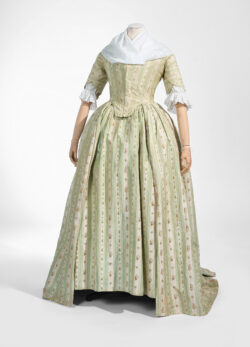
From fashion heritage to digital innovation
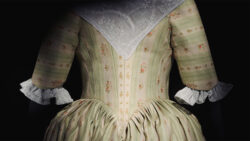
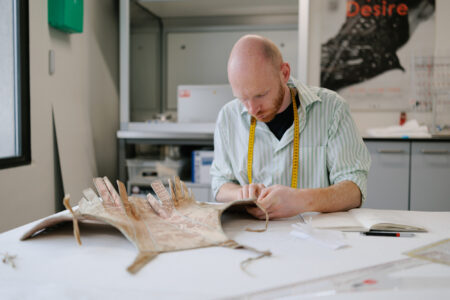
MoMu contributes to Twin it! Part II with the digitisation of an 18th‑century robe à l’anglaise from its collection, nominated by the Flemish Government. Rather than producing a simple scan, the garment was reconstructed in full through reverse engineering. Together with d_archive, MoMu combined historical research with digital pattern‑making, material scanning, and contemporary digital fashion technologies to rebuild the object layer by layer.
 1/4
1/4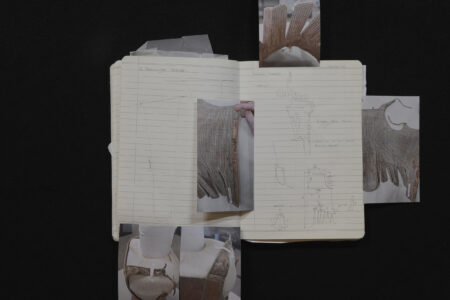 2/4
2/4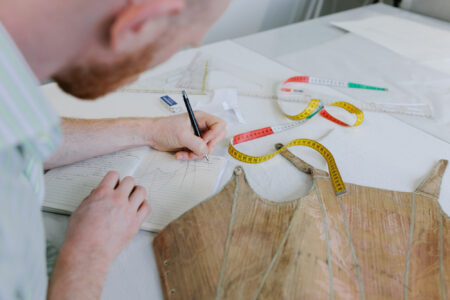 3/4
3/4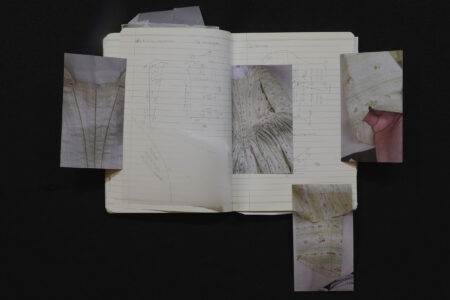 4/4
4/4
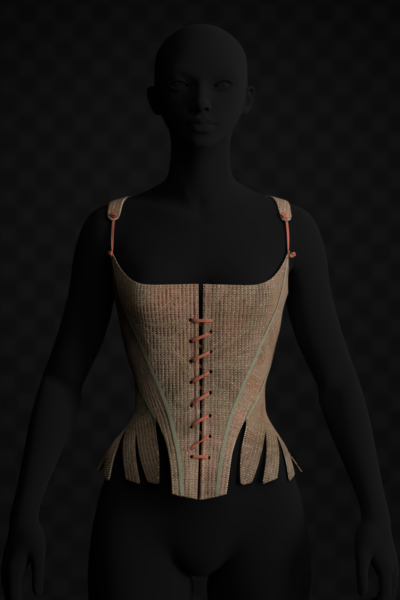
They captured fragile silk fabrics in high‑resolution texture maps to preserve colour, sheen and surface detail in the digital model. The undergarments, crucial for the silhouette and drape, were also meticulously reconstructed based on original late‑18th‑century examples. Using CLO Virtual Fashion, the researchers assembled the digital patterns, which they then refined further in Blender for modelling, animation and rendering.
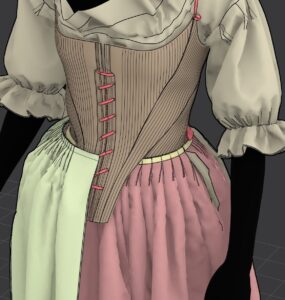
Screenshot showing the layering of the different skirts and function of the stay 1/4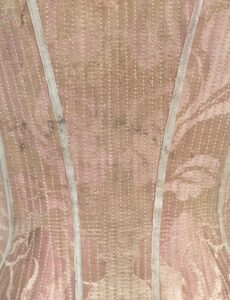
Image of the back of the stay, showing elaborate stitching of the baleen tunnels and damask floral pattern 2/4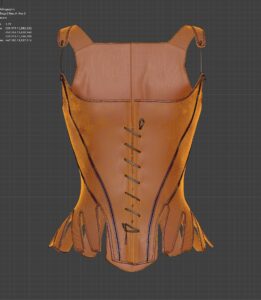
Wireframe of the stay 3/4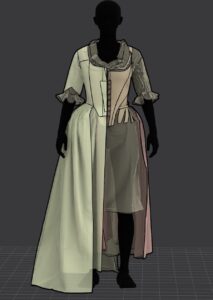
Screenshot showing the layering of the 3D model of the 'robe à l'anglaise' 4/4
Bringing hidden details to light
The final 3D model allows users to explore details that can no longer be shown physically. One striking example is the ingenious ribbon system used to lift the gown’s train, today only understandable through animation made possible by 3D digitisation. Thanks to this digital reconstruction, not only the appearance but also the technical intelligence of the garment becomes visible again.
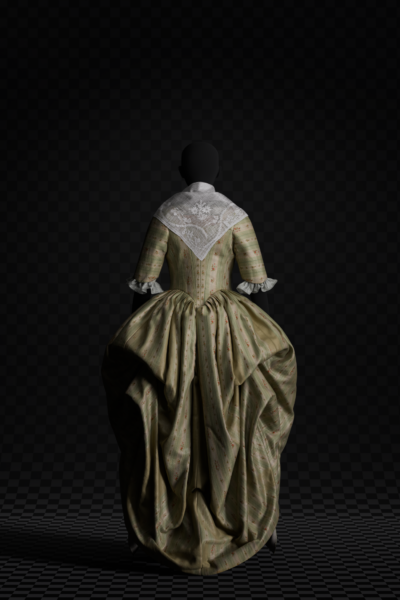
The project demonstrates how 3D assets can go far beyond traditional display. They support the preservation of fragile heritage, open up new opportunities for research, and create space for creative reuse. In Twin it! Part II, an 18th‑century dress gains a new life, digital, yet firmly embedded in today’s European heritage landscape.
Robe à l’anglaise, 1780-1800
Discover the different layers of the 3D model of the robe à l’anglaise here
Twin it! 3D for Europe’s Culture is a European initiative dedicated to the digital preservation, sharing, and reuse of cultural heritage, supported by the Flemish Government, Department of Culture, Youth and Media.