Group Visit Without a Guide
Visit MoMu as a group without a MoMu guide.
Visitor information
Tickets
When
Tuesday to Sunday between 10 AM and 6 PMLanguages
Dutch, French, English & GermanPurchase tickets and register
- Please register in advance and then reserve your entrance tickets (group rate applies for 12 or more tickets).
- Always reserve a time slot and tickets to ensure a smooth check-in. Without a reservation, your group may be asked to wait during busy periods.
- Maximum of 20 tickets per time slot.
- Is your group larger than 20 people? Please register in advance at balie@momu.be. You will then receive a confirmation for guaranteed admission and a smooth check-in.
Good to know
- Self-guided tours are not permitted. Would you like a guided tour? Discover the full range of options here.
- Would you like to visit the MoMu Café before or after your visit? Please book in advance via cafe@momu.be.
Questions
For questions about your booking, please contact booking@antwerpen.be, +32 3 339 47 00 (between 9 and 12 AM).
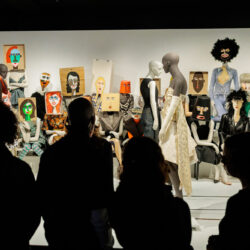
Visit the museum with your group and discover MoMu's temporary exhibitions and the MoMu Collection.
 1/3
1/3 2/3
2/3 3/3
3/3
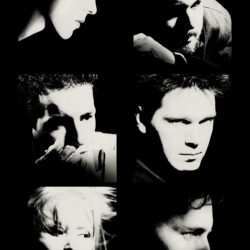
The Antwerp Six (up to 17.01.2027)
In 2026, The Fashion Museum Antwerp (MoMu) will celebrate the 40th anniversary of the international breakthrough of the Antwerp Six. This will be the first time that a major exhibition is devoted to these six iconic fashion designers.
The exhibition highlights the unique trajectory that connects these six exceptional designers. It began with their study at the fashion department at the Royal Academy of Fine Arts in Antwerp and resulted in six highly influential solo careers. In 1986, Dirk Bikkembergs, Ann Demeulemeester, Walter Van Beirendonck, Dries Van Noten, Dirk Van Saene and Marina Yee put Antwerp on the fashion map when they each presented their own collections at the British Designer Show in London. This led to their international breakthrough and established the City of Antwerp as a capital of fashion. Their unique designs continue to influence international fashion today.
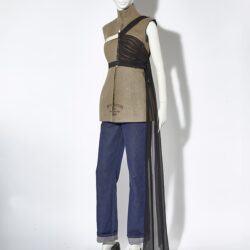
Fashion from the MoMu Collection
MoMu’s collection presentation looks back at four decades of Belgian fashion, complemented by a selection from the museum’s historical collection. The exhibition gives an overview of the most important protagonists of Belgian fashion, based on the themes that characterise the distinctive nature of the MoMu Collection.
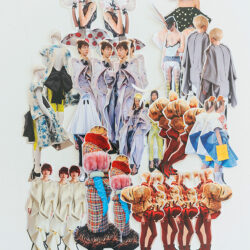
LOOKS, LOOKS, LOOKS - The Antwerp Fashion Department at work (from 11.07.2026)
With LOOKS, LOOKS, LOOKS, MoMu offers an insight into the practice of the Fashion Department of the Royal Academy of Fine Arts Antwerp. The exhibition shows silhouettes of student work alongside graphic material such as sketchbooks and drawings, revealing the process behind the finished result.