Dries Van Noten

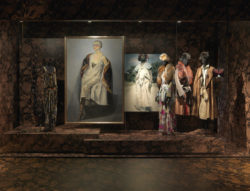
The MoMu Collection includes an exemplary overview of the work of Dries Van Noten. His designs for both women and men are richly represented. In 2015, Van Noten curated the Dries Van Noten: Inspirations exhibition, attracting record numbers of visitors to MoMu.


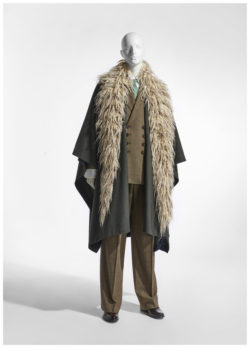


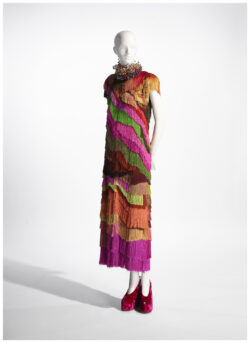

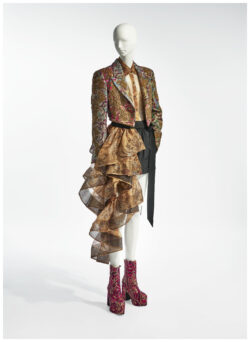
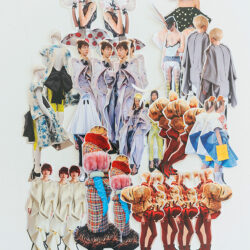
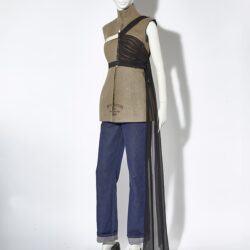
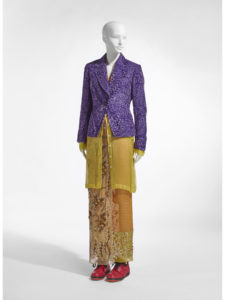
Dries Van Noten’s young life was permeated with fashion, thanks to his parents’ and grandparents’ clothing stores. He opened his first boutique in Antwerp in 1985, and after he participated in the British Designer Show in 1986, his work rapidly attracted international buyers. In 1989, he moved his shop to the Modepaleis building, where he still sells his collections today. His first men’s show in Paris, for Spring-Summer 1992, ended with a number of silhouettes for women. His first show with designs exclusively for women followed a few seasons later, for Spring-Summer 1994, and the interchange between the two collections has been a constant in his work. Van Noten's design process always begins with the development of prints that form the basis for silhouettes that can be either loose-fitting or structured. His characteristic embroidery work then takes shape. The designer seeks tension between all these elements, expressed among other things by a combination of costly and simple materials, contrasts between different prints, and mixing pale with bright colours.
EMBROIDERY AS SIGNATURE
Detail of an embroidered wraparound skirt, including beads, sequins and silk threads, Autumn-Winter 1996-97

Dries Van Noten, Autumn-Winter 1996-97 Jacket with pomegranate motifs in gold embroidery, cannetille, appliqué with feathers and winter sequins, Autumn-Winter 2006-07

Dries Van Noten, Autumn-Winter 2006-07 Embroidery detail, Autumn-Winter 2006-07

Dries Van Noten, Autumn-Winter 2006-07 Detail of bomber jacket with appliqué embroidery, Autumn-Winter 2021-22
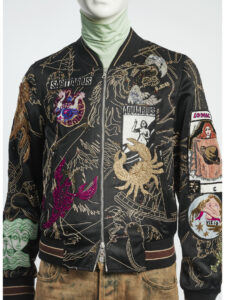
Dries Van Noten, Autumn-Winter 2021-22
In 1989, Christine Mathys, with whom Dries Van Noten worked closely on the commercial expansion of his fashion house until she died in 1999, introduced him to India. India would have a strong influence on the aesthetics of his early work, and he established intense and loyal collaborations with the producers of the embroideries he used. This resulted in exceptional embroidery work for all of his collections, which over the years became one of the most defining features of his signature style.
IMAGINARY JOURNEYS

INVITING LIGHTS
Dries Van Noten orchestrates his shows like no other, with invitations that subtly anticipate what his guests might expect. The little box with tiny lamps to announce the 2003-04 Autumn-Winter collection is a good example. For the show, the catwalk was illuminated by thousands of Christmas lights in rainbow colours. They resonated beautifully with the 1920s vintage style of the clothing and later also adorned a Christmas greeting.


UNFORGETTABLE ANNIVERSARY
Dries Van Noten celebrated his 50th collection, for Spring-Summer 2005, with a spectacular show in an abandoned hangar on the outskirts of Paris. The guests sat at a table that was 140 metres long, festively lit by 130 crystal chandeliers. After dinner, to the astonishment of all those present, the table transformed into a catwalk. To the beat of Ravel’s ‘Boléro’, he opened with a series of white blouses and voluminous skirts, followed by a mix of floral prints, stripes and crewel embroidery work inspired by Hungarian and Romanian regional costume.

Dries Van Noten takes his audience on imaginary travels and tells multi-layered stories with atmospheric textiles. The mise-en-scène of his shows sublimates the clothes he presents to a higher level and achieves maximum effect with sometimes surprisingly simple elements, such as Christmas lights or umbrellas.
FLORAL COMPOSITIONS


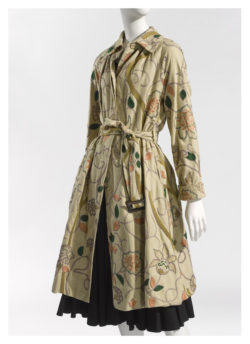


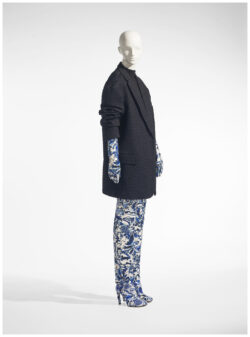
Dries Van Noten translates his passion for gardening into a generous use of floral prints and well-considered, yet natural compositions. Floral motifs find countless experimental applications, with ultimately balanced results. In his Spring-Summer collection for 2013, he mixed flowers in pastel colours with tartan punk. Flowers for Men, for Spring-Summer 2014, was an eclectic superposition of floral prints from men's apparel throughout history, ranging from 18th-century chintz motifs to Hawaiian flowers.
LAYERED STORIES

Necklace detail, Spring-Summer 1999

Dries Van Noten, Spring-Summer 1999 Dress with hook fastenings and shawl in chain knit, Spring-Summer 1999

Dries Van Noten, Spring-Summer 1999 Shawl from the back, Spring-Summer 1999

Dries Van Noten, Spring-Summer 1999
Inspired by Jane Campion's The Piano, Dries Van Noten designed silhouettes for his Spring-Summer 1999 collection that seemed to have weathered a storm. He combined a jacket in open knit with runny prints and jewellery made with mussel shells. A black dress with a hook fastening takes on a dark allure with a scarf in chain knit that seems to be disintegrating.
ECLECTIC INSPIRATIONS
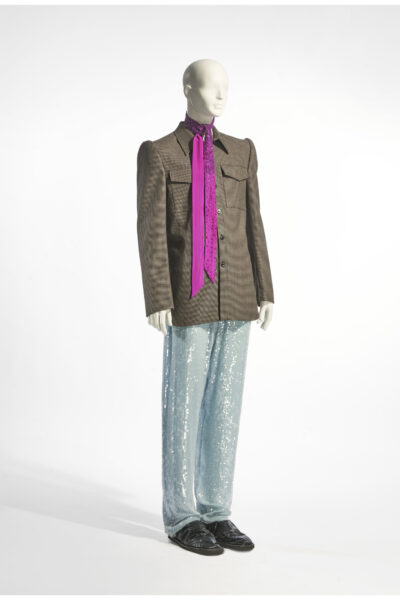
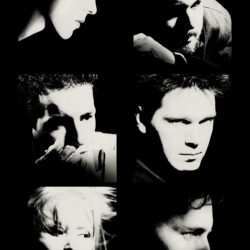
Countless sources of inspiration, ranging from old masters such as Antoon Van Dyck and Angelo Bronzino to abstract art by Yves Klein or Victor Vasarely and heroes from his youth, such as David Bowie, Marc Bolan (Autumn-Winter 2022-23) and Malcolm McLaren, all find reflections in Dries Van Noten’s work, in a mix of both classic and the rebellious. In 2014-2015, these inspirations also became the subject of the exhibition Dries Van Noten: Inspirations at MoMu and the Musée des Arts Décoratifs in Paris, further cementing Van Noten’s reputation as one of fashion’s most established names. The prestigious awards and prizes that he has received during his career, including the American 'CFDA International Designer of the Year Award' in 2008 and his appointment as French 'Officier de l’Ordre des Arts et des Lettres' in 2014 underscore the international impact of his work.
A new chapter
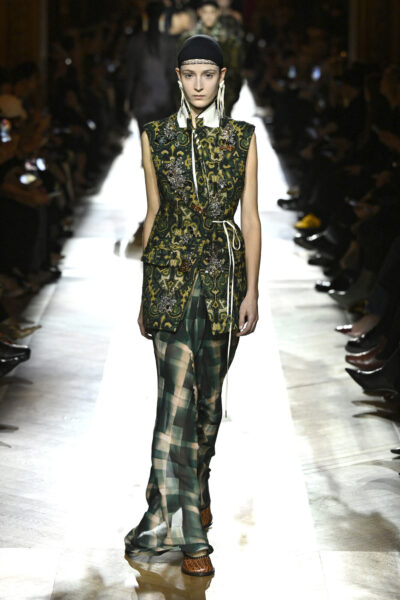
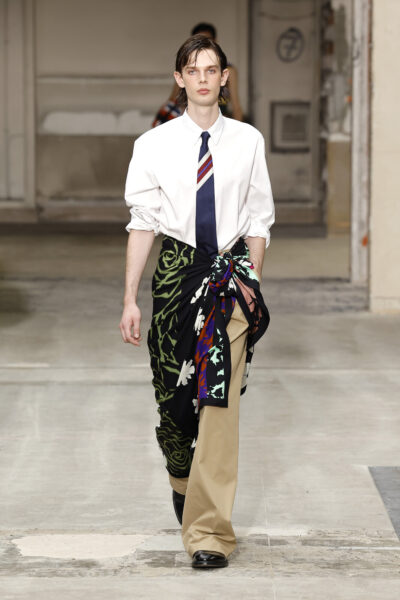
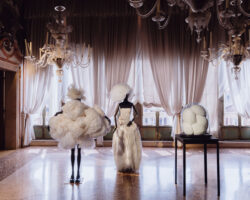
In 2024, Dries Van Noten announced his departure from the company he founded and handed over creative leadership to Julian Klausner. Klausner ensured continuity while also introducing his own distinctive signature style. In 2026, the Fondazione Dries Van Noten opened in the Palazzo Pisani Moretta in Venice. The foundation is dedicated to craftsmanship.
Author: Romy Cockx
Photo above: Casper Sejersen