
Christening Gowns
In our society, in which religion plays a smaller role than it once did, fewer and fewer parents are having their baby christened. For the younger generation, something that was a self-evident ritual for their own parents now feels like a thing of the past. Today, they are increasingly likely to opt for a baby shower as an alternative to traditional baptism.
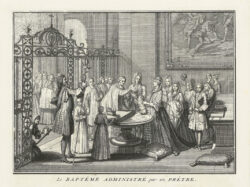
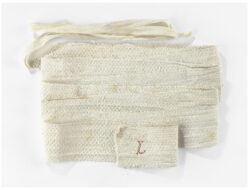
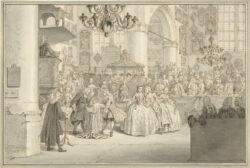
Since the early Middle Ages, it was customary in the Catholic church to have a child baptized as soon as possible after birth. In this region, newborn babies were tightly swaddled with bands and cloths until the age of three months. The newborn child was also swaddled in this manner during baptism. In noble and affluent bourgeois families, the child to be baptized would lie in a costly bearing cloth or christening blanket. This is a blanket or swaddling cloth, often in white linen or ivory silk, decorated with embroidery or lace. In Christian teaching, white has symbolized purity and innocence since the Middle Ages. The colour emphasizes the purity of the newborn baby.
The rise of the white christening gown
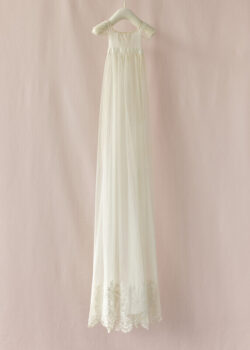
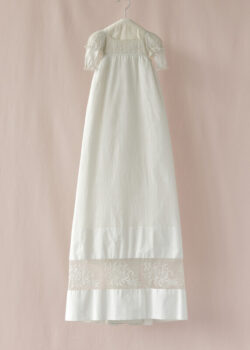
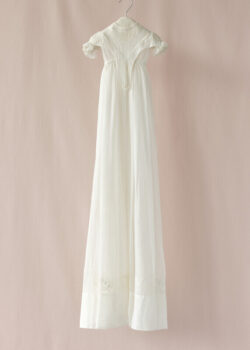
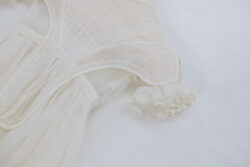
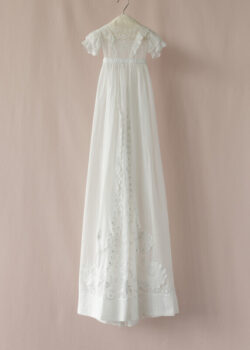
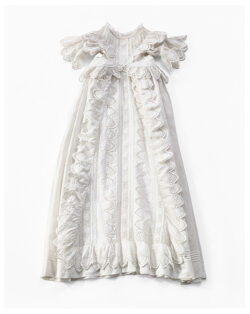
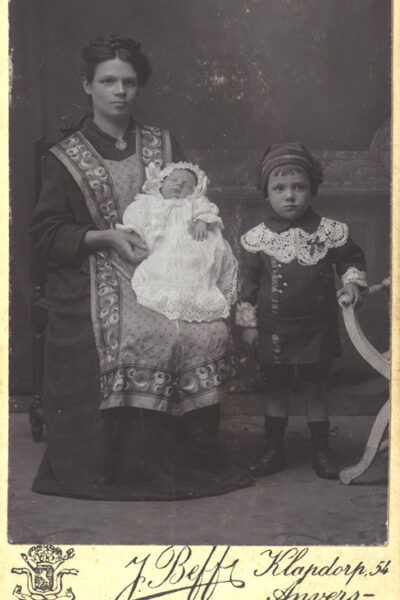
By the late eighteenth century, babies were swaddled less and baptized later, leading to the emergence of the christening gown. At first, only wealthy families could afford this specialized ceremonial garment. It was not until the mid-nineteenth century that christening gowns came into use among ordinary families, partly because industrialization increased the availability of textiles and partly due to rising overall prosperity.
The role of fashion magazines
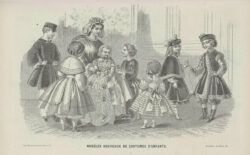
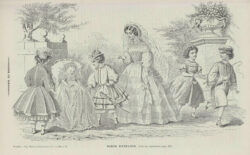
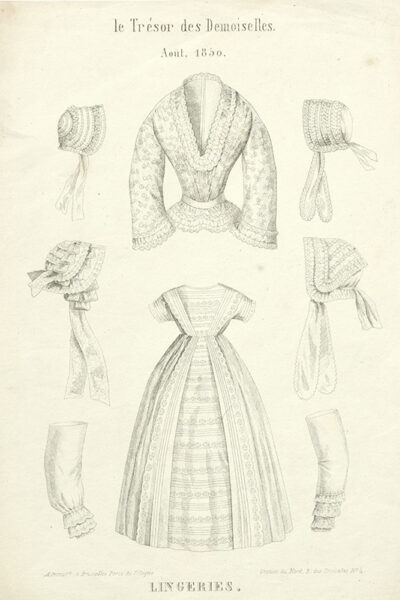
Illustrations of christening gowns – and, by extension, baby gowns – are relatively rare. This is probably because little changed in the appearance and cut of the christening gown: it typically consisted of a short bodice with short sleeves and a long skirt. Differences were found mainly in the decoration, which closely followed contemporary women’s fashion. Moreover, christening and baby gowns did not distinguish between boys and girls. Nevertheless, the influence of 19th-century fashion magazines on the emergence and dissemination of christening gowns should not be underestimated. For example, the trendsetting Le Journal des Demoiselles was among the first magazines to publish engravings of babies wearing christening or presentation gowns in the late 1850s. The latter were worn when receiving visitors after a baby’s birth and on other formal occasions.
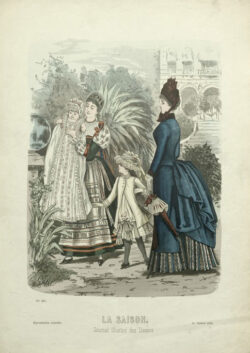
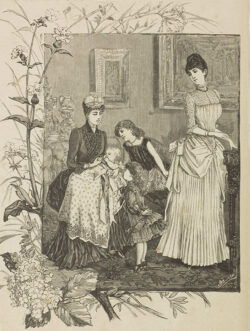
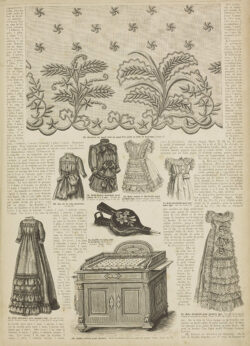
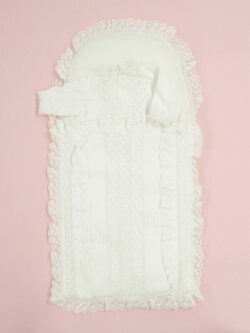
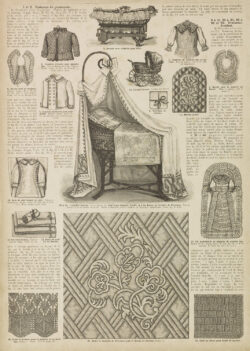
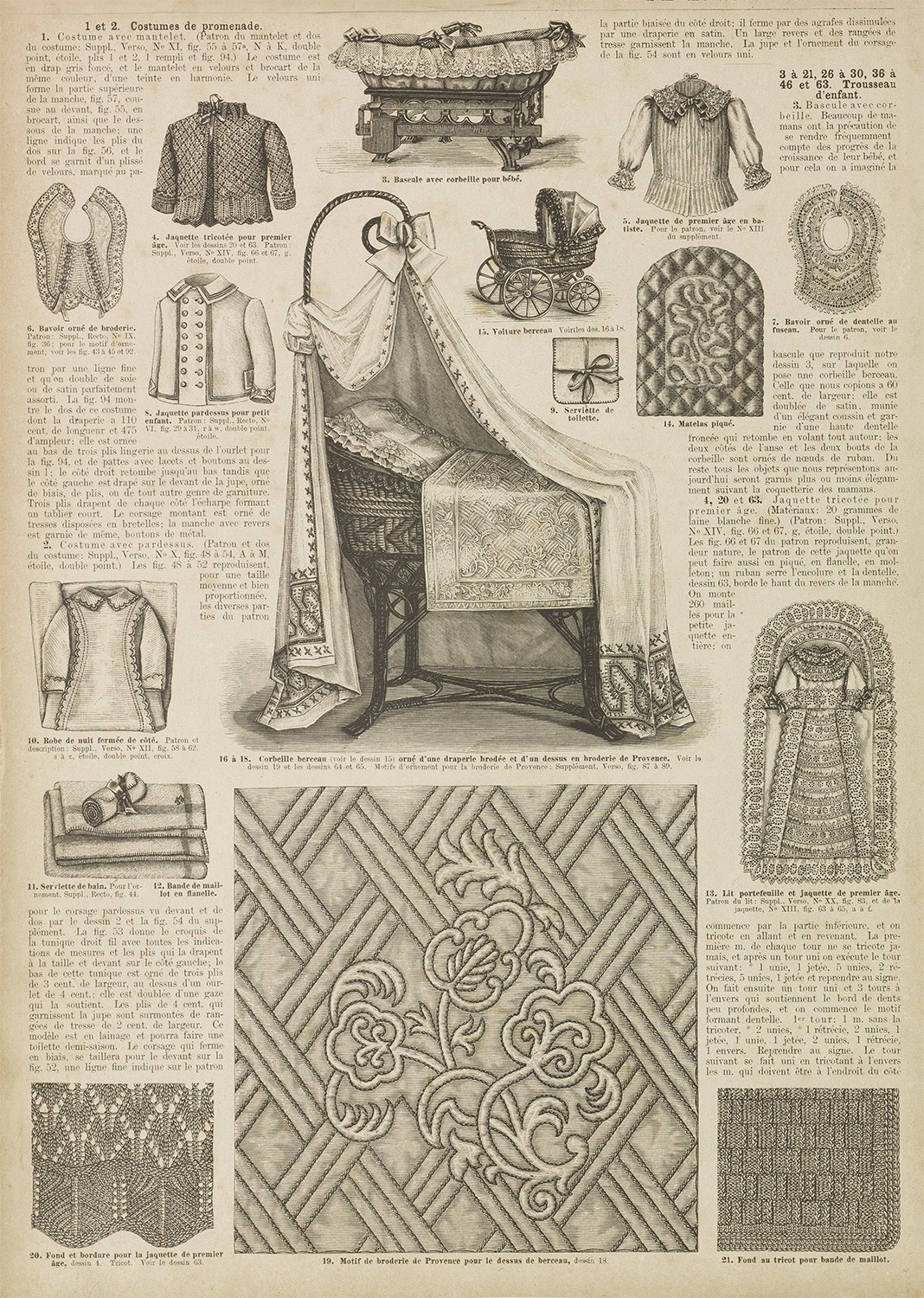
After 1870, christening and baby gowns appear with increasing frequency in fashion magazines. For instance, in its 16 February 1885 issue, La Saison published a veritable baby special, devoting four pages to christening gowns and children’s clothing. The magazine also introduced the new combination of christening gown and padded baby carrier, which appears to merge the historical bearing cloth with the christening gown. This issue illustrates not only the growing range and variation of such garments, but also the increasing focus on babies and young children during this period. As early as January 1872, Le Journal des Demoiselles was already commenting on the allure of Parisian magasins de lingerie pour bébés and warning of the temptation to spend excessively on fripperies for one’s mon cher trésor.
The manufacture of christening gowns
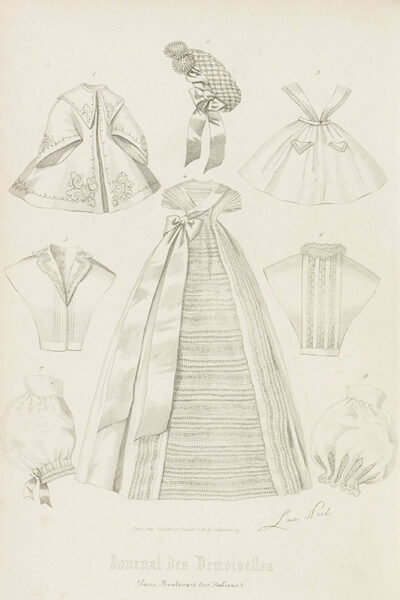
In the 19th century, christening and baby gowns in white linen and/or cotton were considered part of the household linen. They were sewn by seamstresses, just like other domestic textiles. These women worked for a linen saleswoman, a shop selling fashion articles, or a department store. Christening gowns were made to order, but shops also stocked a selection of ready-made gowns. They advertised their christening gowns in fashion magazines.
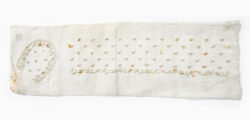
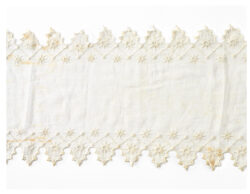
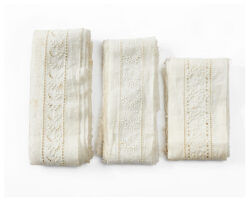
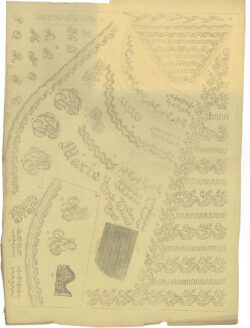
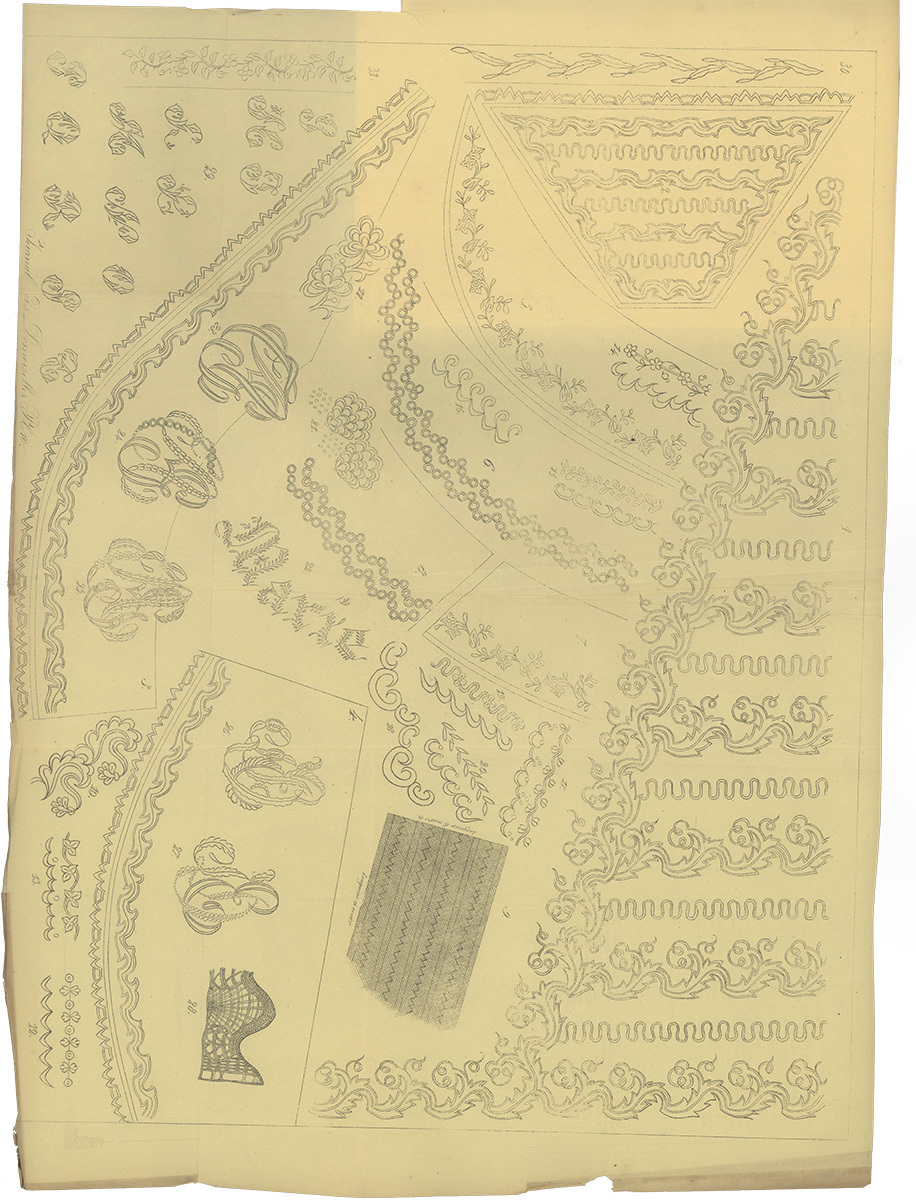
For christening gowns and matching bonnets, linen seamstresses often used fabric, ribbons, and inserts that had been pre-embroidered by professional embroiderers working from home. Some christening and baby gowns are veritable puzzles, skilfully cut and artfully assembled from ribbons and inserts. Expectant and young mothers could also sew christening or baby gowns themselves. Learning to sew was a key part of girls’ education, and sewing samplers demonstrate the fine needlework also seen in baby gowns. Occasionally, fashion magazines provided patterns for christening and baby gowns. Fabric and ribbons could be purchased in fashion boutiques and department stores.
By the end of the nineteenth century, the christening gown had become firmly established. Like the communion gown and the wedding dress, it was a cherished garment, carefully preserved and often passed down from generation to generation. As baptism has become increasingly uncommon, this once much-loved dress is gradually disappearing from view.
Author: Wim Mertens
Photo above: Stany Dederen