Six Designers. Six Unique Paths. A Lasting Influence on Fashion

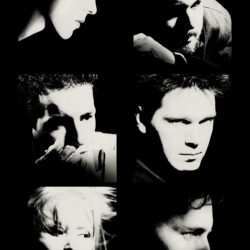
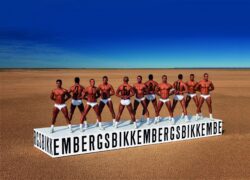
MoMu celebrates the fortieth anniversary of the international breakthrough of the Antwerp Six. For the first time, an official exhibition is dedicated to Dirk Bikkembergs, Ann Demeulemeester, Walter Van Beirendonck, Dries Van Noten, Dirk Van Saene and Marina Yee. Their joint presentation at the British Designer Show in London in 1986 proved a turning point: Antwerp was firmly placed on the international fashion map.
Why is this the moment for such an exhibition?
ROMY COCKX: "Because the Antwerp Six have acquired an almost mythical status, and that mythology often obscures the reality. Forty years after their breakthrough, we didn’t want to simply look back, but to examine what their trajectory reveals: how talent develops, how a creative environment operates, and how essential autonomy is. It’s also striking that there has never been an official exhibition telling their story as a whole."
What made that presentation in London in 1986 so decisive?
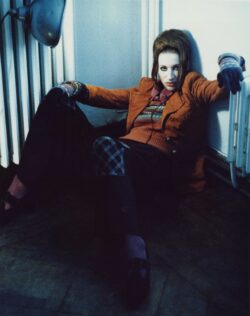
GEERT BRULOOT: "London wasn’t a calculated strategy, it was more a convergence of circumstances. In the 1980s, London was the epicentre of new fashion – punk, New Romantics, radical styling. There was an energy of experimentation and renewal. When the Six showed their work there, on the second floor of the fair, buyers and journalists began whispering to each other: 'Go upstairs, something is happening there.' That’s also how the name ‘the Antwerp Six’ came about – not coined by the designers themselves, but by the international press. What began as a shared presentation suddenly became a narrative."
The Antwerp Six are often seen as a single group. Is that accurate?
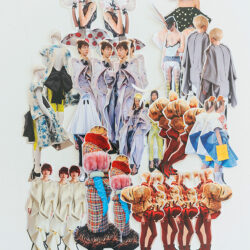
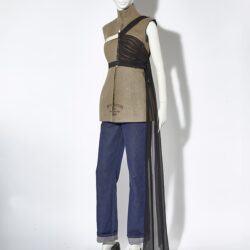
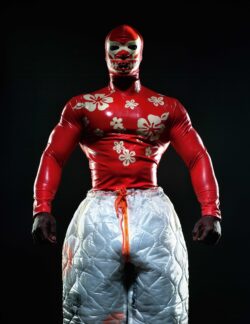
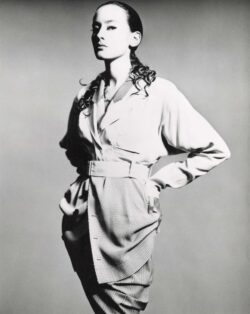
RC: "Not really. They were never a collective in the classical sense. What connects them is a shared context, not a shared style. In the exhibition, we therefore present not an ‘Antwerp look’, but six radically individual universes. Each designer is given a distinct space with its own logic and visual language."
How do you translate those individual trajectories into a single exhibition?
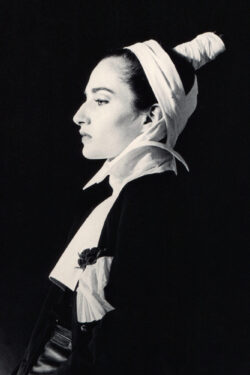
GB: "That is the central curatorial challenge. We want to avoid the exhibition speaking with a single voice. Instead, we structure it as six trajectories, with points of intersection that emerge through shared conditions: education, crisis, ambition, modes of presentation."
How were the works selected?
RC: "In close collaboration with the designers. This is not a ‘greatest hits’ story, but an exhibition about processes: beginnings, transitions, experiments. Archival material plays a crucial role."
GB: "We show drawings, invitations, photographs and documents that the public has rarely, if ever, seen. You see how deliberately they approached presentation and communication, long before that became the norm."
What makes their story still relevant today?
KAAT DEBO: "Forty years on, the context has changed completely. The fashion sector is more global, faster and more competitive than ever, while economic and ecological pressures are placing the system under strain. Precisely for that reason, the trajectory of the Antwerp Six remains so relevant today. Their story shows that genuine innovation does not necessarily emerge from the centre, but often from places that consciously position themselves outside it. The momentum of the Antwerp Six can only be sustained if we dare, once again, to rethink the conditions in which talent can grow: with sufficient autonomy, with space for authorship, and with a widely shared understanding that fashion is more than trend-driven consumption. Fashion is a cultural practice – a way of understanding and imagining the time we live in. That is why, forty years on, their story remains so urgent. It is a mirror for today."
The Antwerp Six is on view from 28 March 2026 until 17 January 2027. More info and tickets available here