

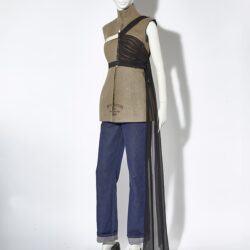

MoMu Restores: An 18th-Century 'Robe à la Française'
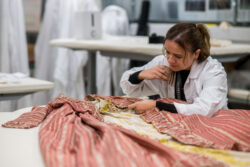
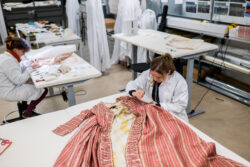
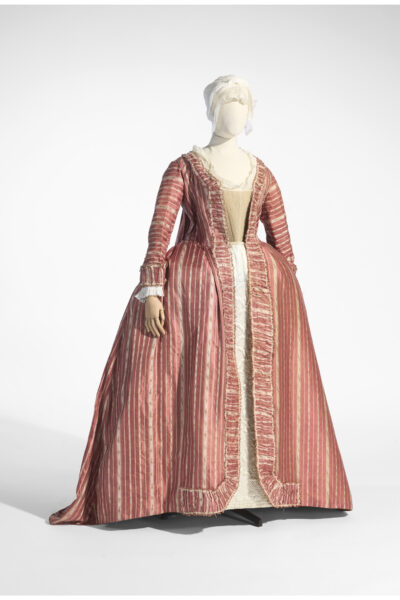
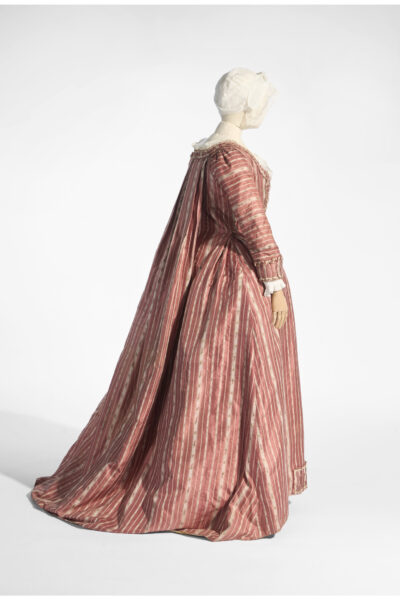
In the restoration studio of MoMu, an exceptional 18th-century piece is being brought back to life. Textile conservator Kim Verkens is working with utmost precision on a rare robe à la française: a silhouette that once embodied aristocratic elegance.
What does this gown tell us about its time?
KIM VERKENS: "It embodies the 18th-century aristocratic fashion. This is not everyday clothing, but a statement of status and refinement. The robe à la française was designed to impress – in movement, in volume, in detail. We only have a few 18th-century gowns in our collection, and very few intact examples. They are extremely rare at auctions and are sold for high sums. That is precisely why it is valuable to invest in a thorough conservation treatment. You don’t come across a piece like this again quickly."
What struck you immediately when you first handled the gown?
KV: "That it is fully lined, which is exceptional for this type of gown. Moreover, we suspect that the lining comes from another 18th-century gown. That gives the piece an additional layer of history."
Why did it need to be restored?
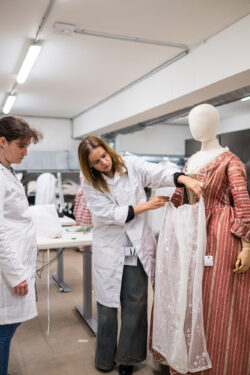
KV: "In the past, an entire side panel was removed from the skirt. As a result, the gown hung unevenly and lost its original proportions. Fortunately, traces of that missing panel were still visible in the seams. The lining inside was intact – which was essential for the reconstruction."
How did the reconstruction of the missing side panel proceed?
KV: "We reconstructed the side panel in digitally printed silk, based on the pattern of the original skirt panel. To place it, a large part of the gown had to be opened. At the same time, we investigated what had happened in the past – fortunately, the original stitching traces were still clearly legible. We also reinforced gaps in the lining with a silk support and fine couching stitches – as respectfully and reversibly as possible."
Did you discover anything that surprised you?
KV: "When opening the seams, we saw remnants of the original side panel. It had simply been cut out of the gown. Why that ever happened, we do not know. That mystery remains part of its story."
What is, for you, the greatest satisfaction in this restoration process?
KV: "The most rewarding part is that you can present a garment that was once considered unfit for display once again, and through research continually uncover new insights. Every historical garment carries traces of use, interventions, and choices. Making those legible – that is fascinating."
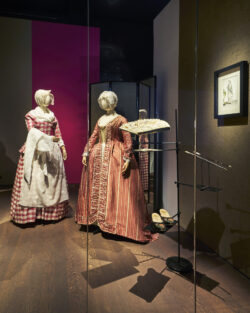
From June 2026, this beautifully restored robe à la française takes centre stage in our collection presentation – a rare silhouette best appreciated up close.